What a small business website really costs in 2026
A plain breakdown of the money involved: the parts you cannot avoid, the parts you can, and where the recurring costs hide.
The short answer
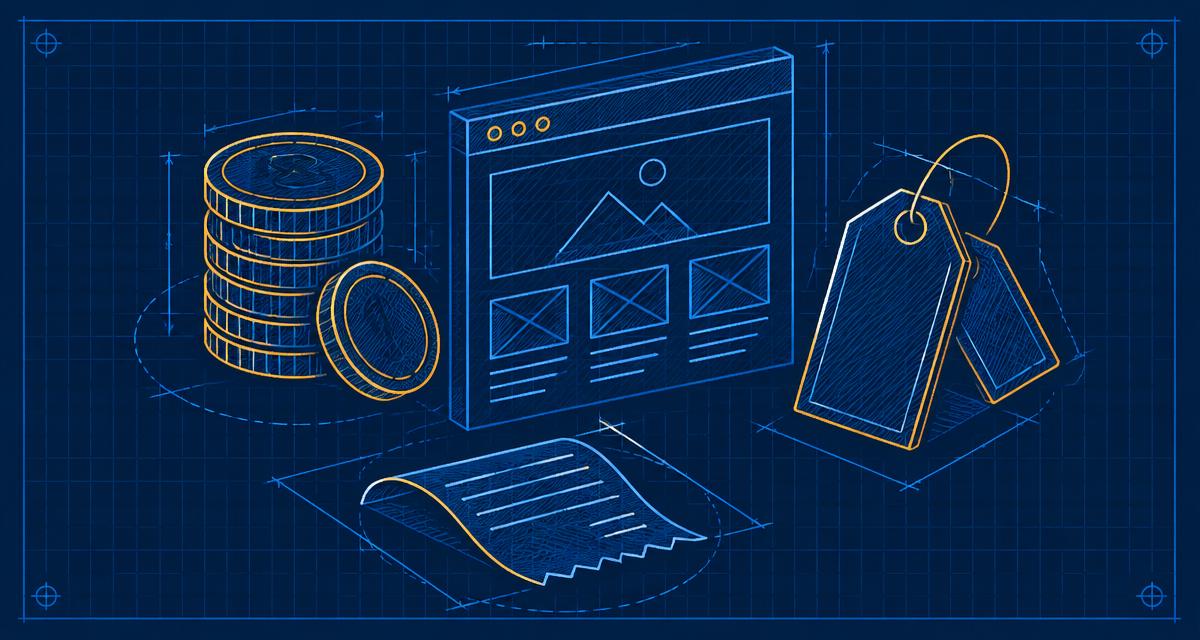
A small business website has three cost layers: a domain name (roughly the price of a coffee each month), hosting or a builder subscription, and the build itself. Doing it yourself with a modern builder costs very little beyond your time; having it built for you is a one-off project fee plus ongoing hosting and support. The recurring costs are the ones people forget.
Website pricing feels deliberately confusing because quotes bundle different things together. Separate them and it becomes simple.
The costs you cannot avoid
- A domain name. Your address on the internet, renewed yearly.
- Somewhere to host it. Either a hosting plan or a website builder subscription that includes it.
- An email address on your own domain. Using a free mailbox on your business card quietly costs you credibility.
The costs that depend on your choices
- The build. Your own time, or a fee paid to someone else.
- Photography and copywriting. Optional, but the biggest visible difference between a site that looks like yours and one that looks like a template.
- Extras. Bookings, online payments, memberships, live chat. Each usually carries its own monthly fee.
Where the recurring costs hide
People budget the build and forget the year after. Before you commit, write down the annual total of every subscription attached to the site: hosting, domain, email, payments, booking tool, any premium plugins. That number, not the build fee, is what you actually live with.
Three honest routes
- 1Do it yourself. Cheapest in money, dearest in hours. Best when your offer is simple and you enjoy the work.
- 2Do it yourself with help. You write and decide, someone experienced builds alongside you in a single session. Fast, and you keep control of the content afterwards.
- 3Have it built for you. A defined scope, a quote, a timeline and someone accountable. Worth it when your time is genuinely more valuable elsewhere, or the site has to do something complicated.
How to compare two quotes fairly
Ask each one the same four questions: what exactly is included, who owns the site and the domain afterwards, what changes cost once it is live, and what the total is for the first two years rather than the first month. Quotes that will not answer those questions are not quotes.
The cheapest site is the one that brings in work. A free site nobody can find is more expensive than a paid one that fills your diary.
A sensible way to budget
Start with the minimum that can earn: domain, hosting, four pages, a working contact route. Spend the rest of the budget only once the site has produced real enquiries and shown you what to improve.
Common questions
- Is a free website builder good enough for a business?
- It can be enough to start, but check whether your own domain is supported, whether the provider shows adverts, and whether you can move the site elsewhere later.
- What ongoing costs should I expect after launch?
- At minimum a domain renewal and hosting or a builder subscription, plus any paid extras such as bookings, payments or premium email.
- Should I pay monthly or once for a website?
- Either works, but make sure you know who owns the domain and the site if you stop paying. Ownership matters more than the payment shape.
Want this done with you?
Start with the free blueprint — answer a few questions and get the plan, the tools and the costs for your own site.
Newsletter
New posts by email, plus a free blueprint
Subscribe and we'll send you our free website blueprint — the pages, content and tools your site needs — then every new post as it's published. No noise, unsubscribe any time.